
There's No Perfect Lot: What to Check Before You Buy Land to Build On in Florida
From the road, the lot in our build series looks like a great piece of land: about three acres, rolling, full of trees. It is a great piece of land. But before we could start the house, it needed soil testing, work around a flood-prone low spot, clearing, and about 95 truckloads of fill dirt.
I'm Trevor with Curington Homes. My family has been building custom homes in Ocala and Marion County since 1972, and over the next year we're following one home from raw land to move-in. This first episode is about the land: what this lot needed, and what you should look for when you're shopping for one.
The short answer
There's no perfect lot, but there is a lot you can understand before you buy. Before you sign, check these seven things:
- Both flood maps: FEMA's map and the county's flood-prone areas. They don't always agree.
- The survey and topography: property lines, setbacks, and where the land rises and falls.
- Where the water goes: walk the high and low points, ideally after a big rain.
- A soil test where the house will sit: sand is good, clay and shallow limestone mean extra work.
- Clearing: don't clear it yourself. Ask your builder first, and check permits, HOA approval and protected gopher tortoises.
- Utilities: no city water, sewer or gas means a well, a septic system and maybe propane.
- Distance and rules: long driveways, long power runs, and HOA or ARB requirements.
Watch the full episode (10 minutes). Chapter times are listed in each section below.
In this article
1. Check both flood maps, not just FEMA's
One of the first things we look at is the survey with topography on it. The survey shows the property lines, the setbacks and the flood zones. The topography shows how the land rises and falls.
FEMA puts this entire lot in Zone X. That's a low-risk flood zone, and most people would stop there. But the county keeps its own flood maps, and the county flags a low spot on this lot as flood prone.
That one area on the county map decided where the house goes and what we could and could not do. Together with the owners, we put the house on the high side of the lot, well away from the county's flood-prone area.
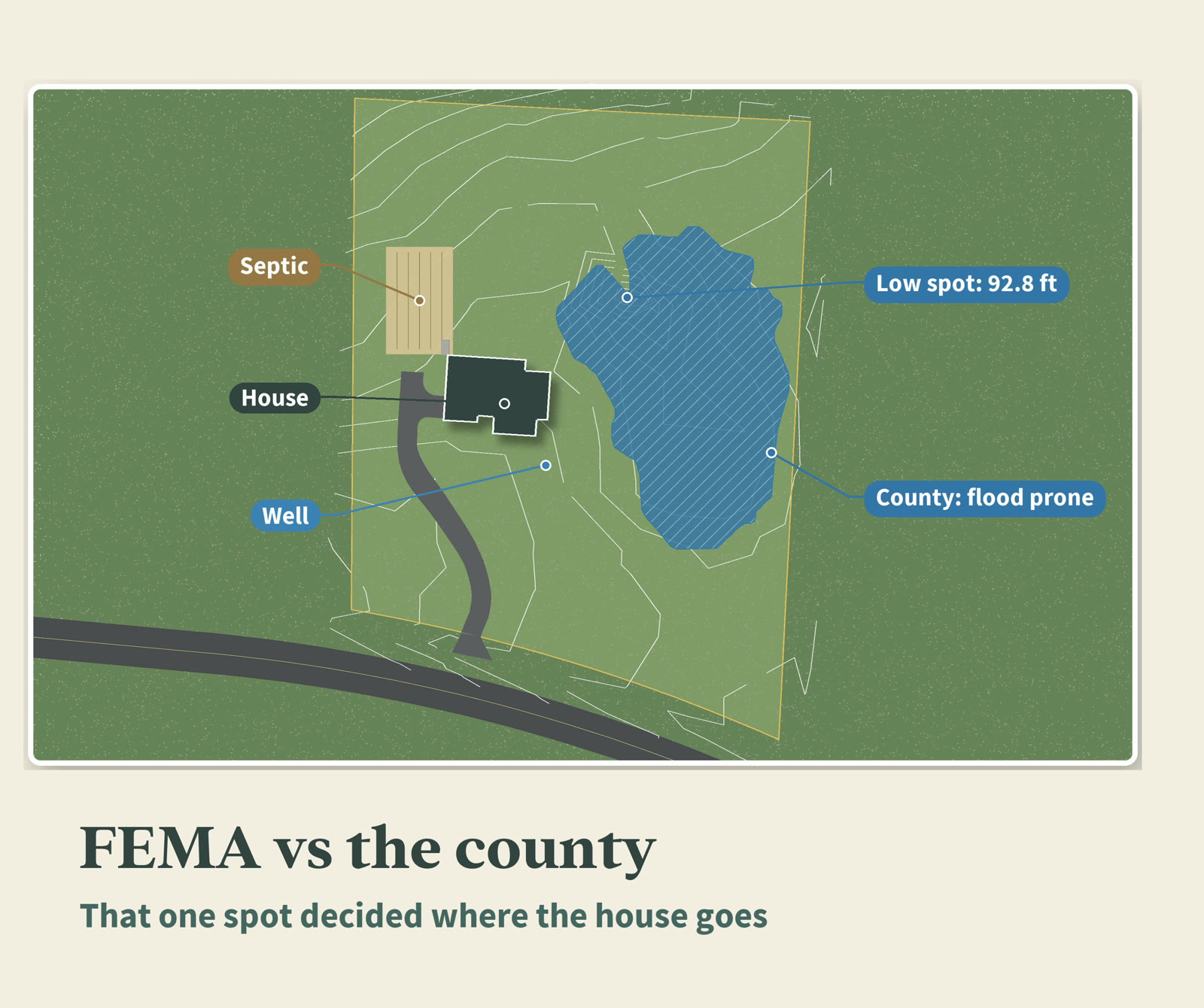
Tip: If you're looking at land, check the FEMA flood map and also check the county's flood-prone areas. They don't always tell the same story. (Video: 0:52)
2. Walk the lot and find where the water goes
From the house down to the bottom of this low spot, the ground drops about 10 feet. From up top you'd hardly notice it, especially when the area was covered in trees and underbrush. But when it rains, that's where the water goes.
Because the county flags it as flood prone, we weren't allowed to touch it other than removing some trees. No fill, no grading, and nothing can be built there. That's completely fine. It's doing what the land has always done. You just don't want the house sitting in its way, and you need to know how much of your lot you can actually use.
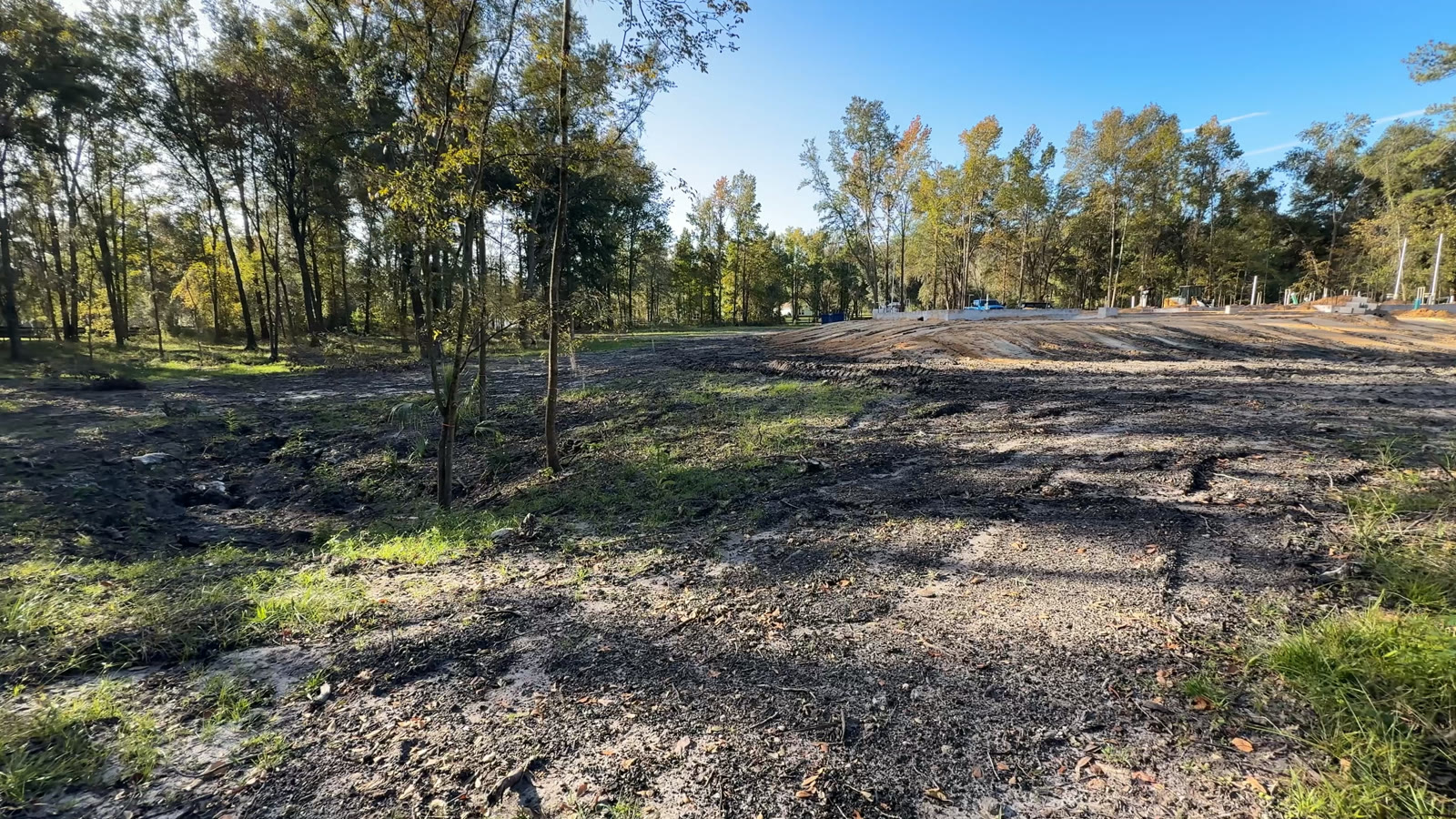
Tip: When you walk a lot, look for the high points and low points and picture where the water will go. If you can, go back and look at it after a big rain. (Video: 1:34)
3. Get a soil test where the house will sit
Next, we had soil testing done: five borings drilled in the spot where the house was going to sit. Some of it was good, clean sand, and that's what you want under a house.
But two of the borings hit clay. Clay holds water. When it gets wet it swells, and when it dries it shrinks, and that can move a foundation. Three of the borings hit limestone as shallow as a foot down. Limestone under part of the house with sand and clay under the rest can make a house settle unevenly.
The engineer's recommendation was two feet of good, clean soil between the bottom of the foundation and the clay and limestone.
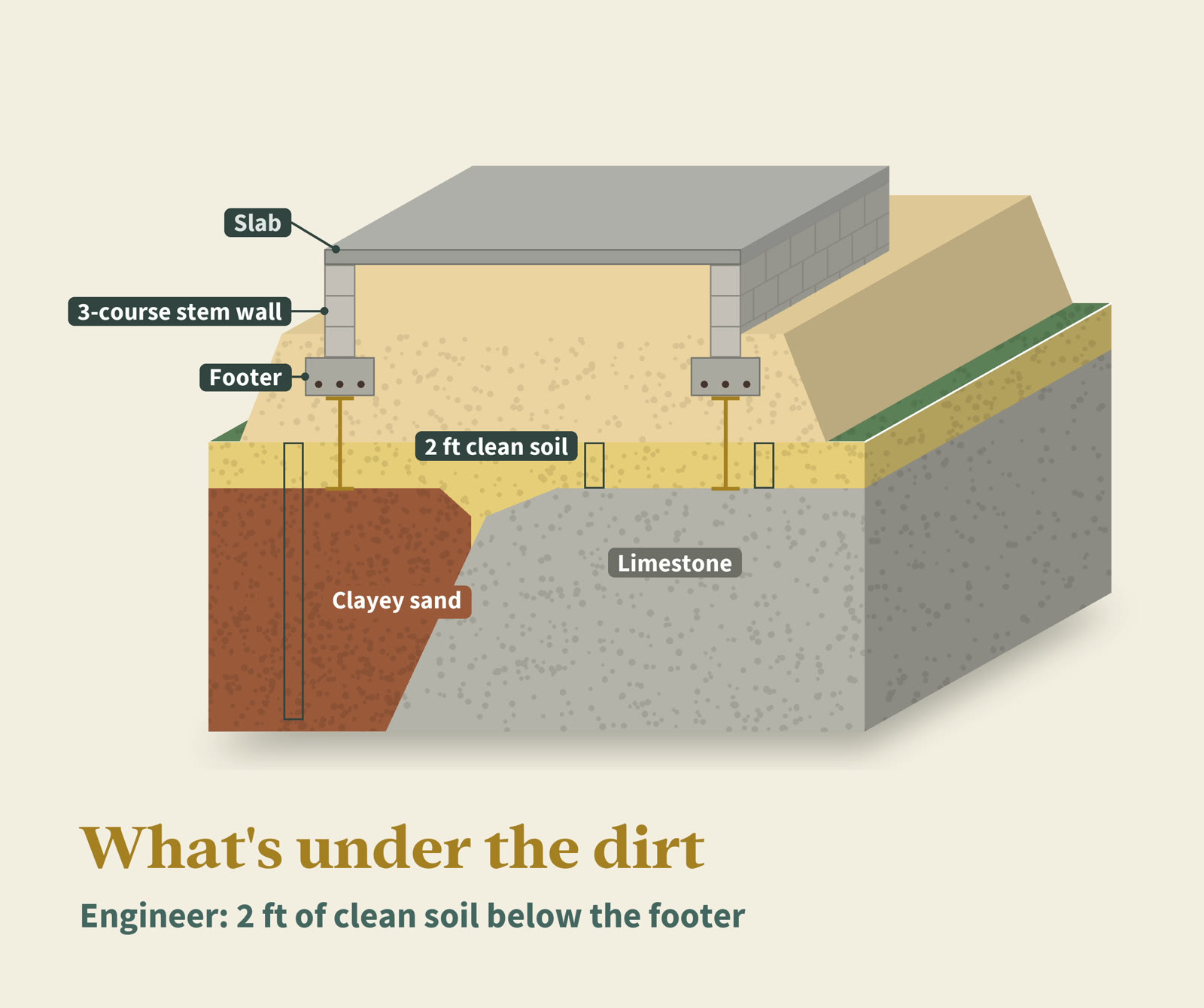
Here's the takeaway: you can't see any of this by walking the lot. If you're shopping for land, do a soil test during your due diligence period, and do it where you think the house will go. The topo survey and the soil test together tell you what the lot really needs. (Video: 2:16)
4. Don't clear the lot yourself: talk to your builder first
If you're buying a wooded lot, it can be tempting to start clearing it yourself. Talk to your builder before you touch a tree. Cutting trees and leaving the stumps can cost more in the end than having the trees pushed over with the root ball. Some cities and counties require approval before you remove trees, and many HOAs and architectural review boards do too.
Here's how clearing was done on this lot. Once we knew what was under the dirt, were under contract and nearly through permitting, we started clearing. We cleared the house pad, the driveway and some yard around the house, and we had a burn permit to burn the debris on site. In the flood-prone area, taking out trees was the only thing we were allowed to do.
When we clear a site, we use an excavator to push the trees over. That pulls the root ball out of the ground all at once. When trees are cut instead, the stumps and roots stay in the ground, rot over time and can cause settling under a foundation.
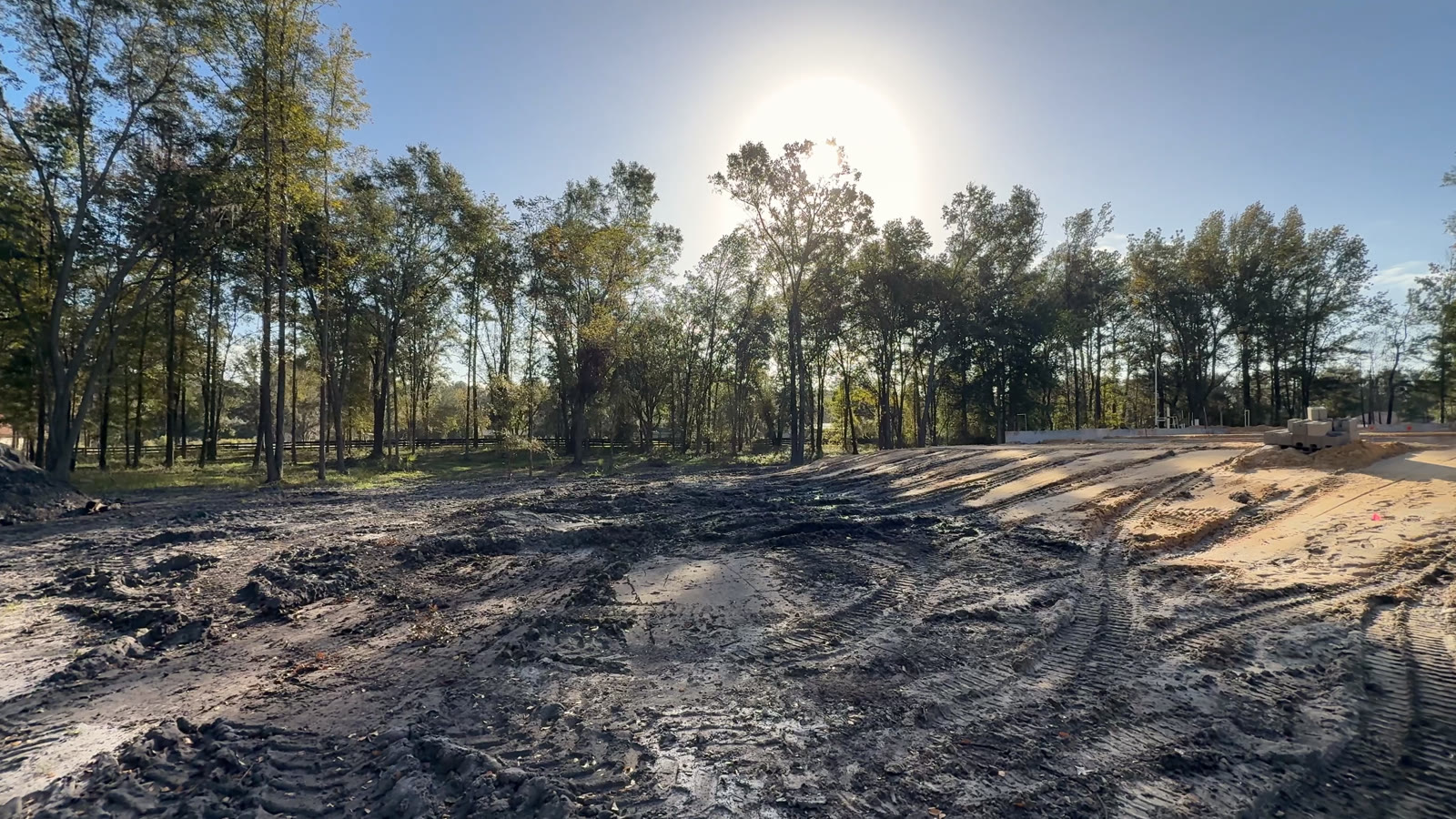
Tip: Clearing is part of the site work. Leave it to your builder, after the soil test and once the permits are in place.
One more thing to look for when you walk a lot: gopher tortoise burrows. We didn't have any on this lot, but they're fairly common around here. Gopher tortoises are protected in Florida, and it's illegal to disturb them or their burrows. If they're near where you want to build, there's a proper process to follow, and we work with experts who handle it. (Video: 3:10)
5. Why we built up with 95 truckloads of fill instead of digging out
So how do you get two feet of clean soil between the foundation and the clay and lime rock? You might think you just dig out the bad soil and replace it. In some specific cases that works. Most of the time, it creates what we call a bathtub effect.
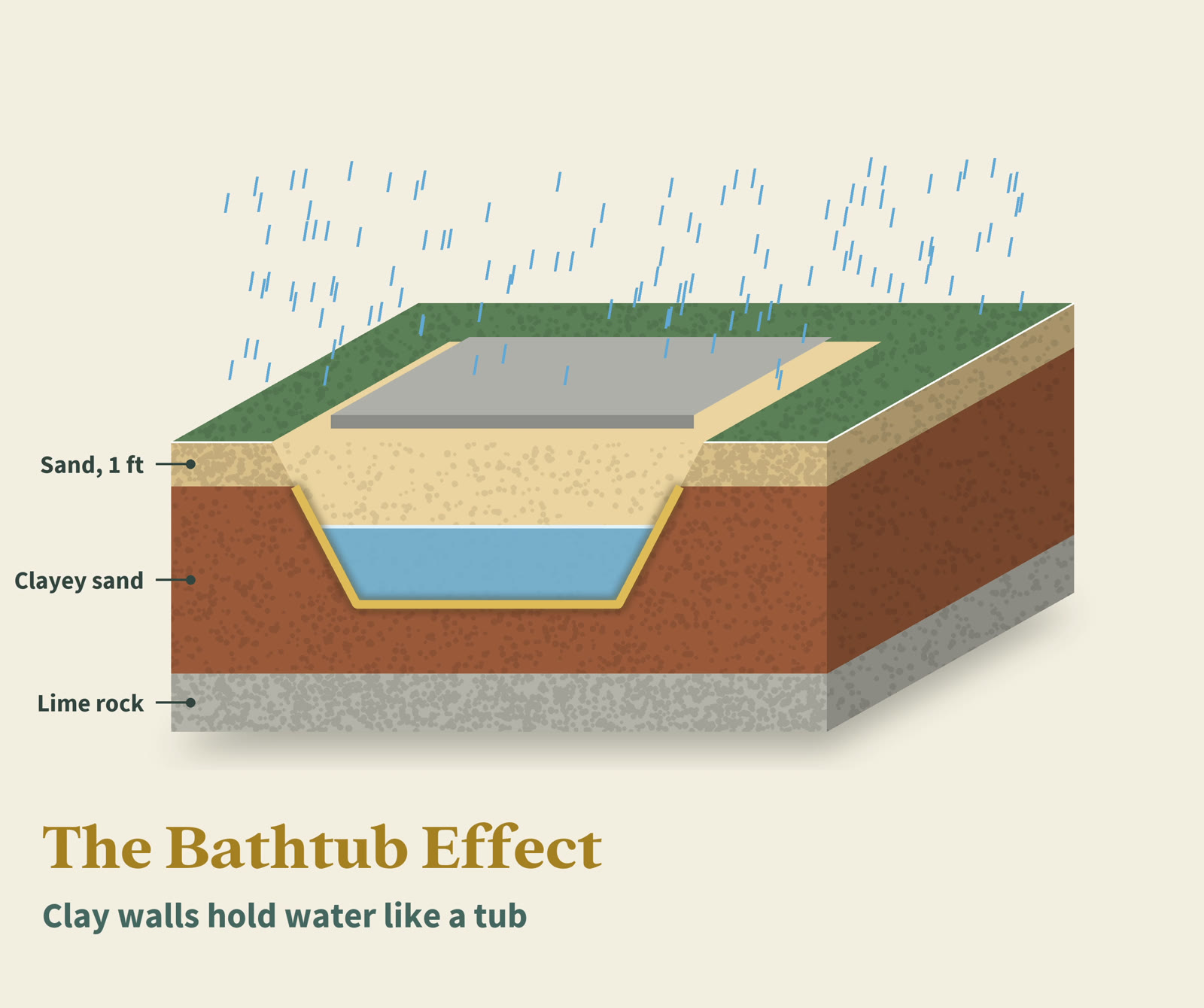
When you dig out clay, you create a big clay bathtub. When it rains, the tub fills up and holds the water with no place for it to go. That's the last thing you want under the foundation of your home.
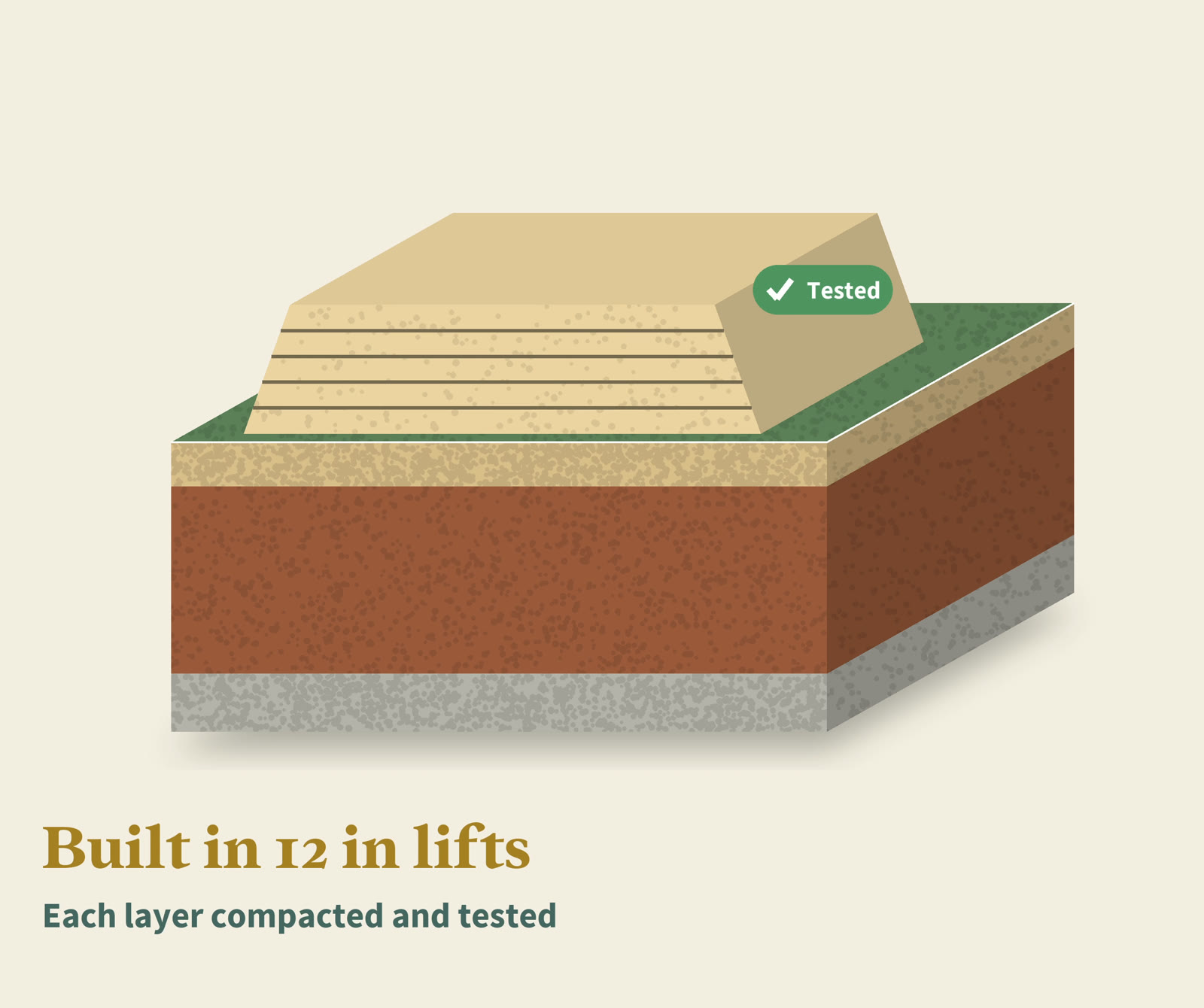
So most of the time the fix is to build up instead of digging down, and that's what we did here. This house pad took about 95 truckloads of clean fill dirt. The fill goes down in layers no deeper than 12 inches, and each layer is compacted and tested before the next one goes on.
Building up has side effects, and some are good. It raises the home overall, especially with a stem wall foundation, so you get a few steps up to the front porch. In the garage it usually means stepping down a step or two from the house. At the end of the job we taper the pad off so the house looks like it belongs on the property, not like it's sitting on a pile of dirt.
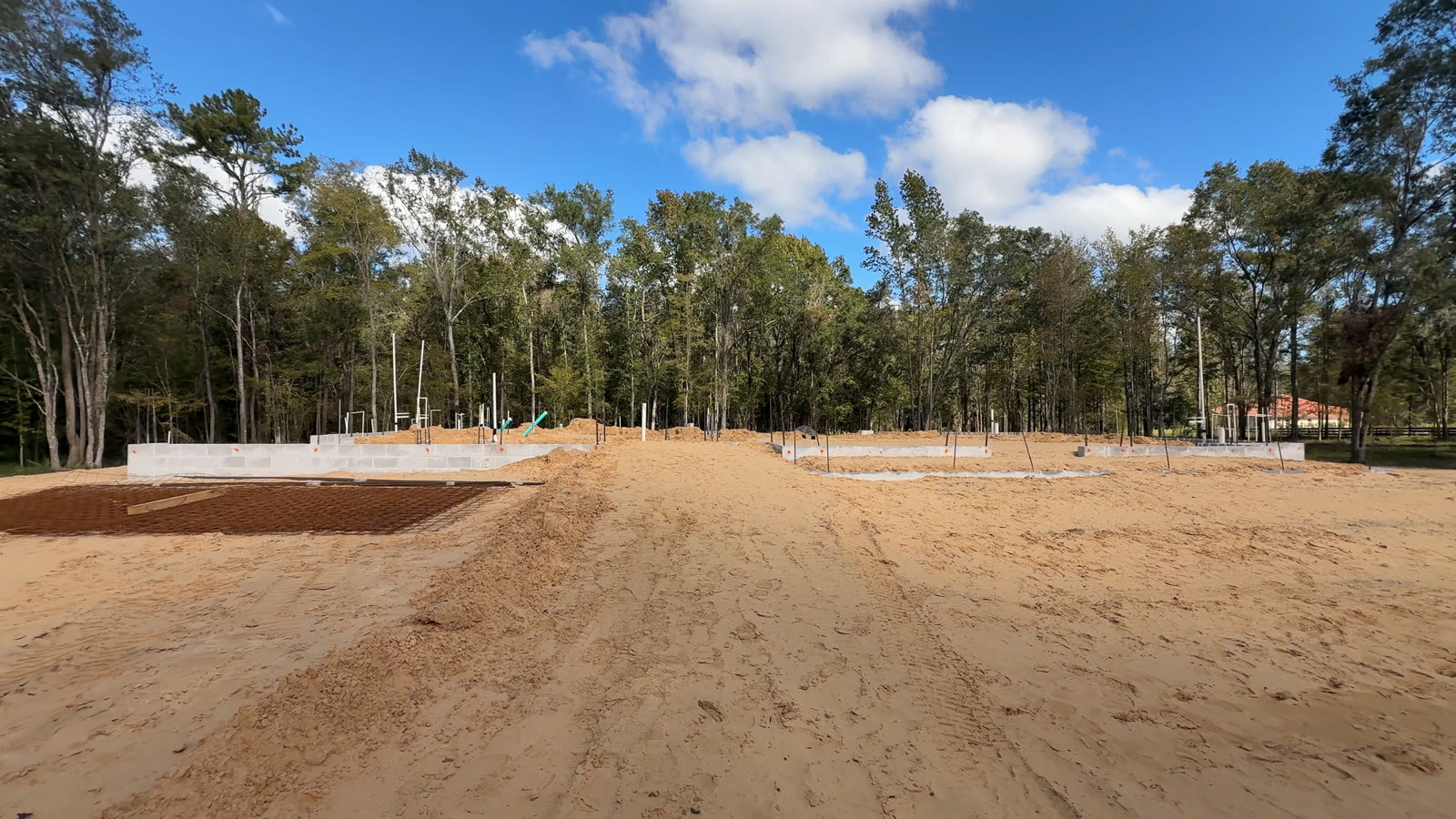
If a soil test comes back with bad results, don't panic. There's almost always a way to work with the lot. Just know it's a line in the budget, and it will affect how the house sits on the property. (Video: 4:20)
Get the free Lot Checklist
There's a lot to remember when you're walking a piece of land. We put it into a free checklist you can print and take with you.
Download the Lot Checklist6. Well, septic and gas when there are no city utilities
Out here there's no city water, no sewer and no natural gas. So this home gets its own well and its own septic system.
Gas: the owners wanted gas appliances and a generator, so they're getting a large propane tank buried on the property. That part is optional. If you go with all-electric appliances, you don't need it.
Well: this one is budgeted for about 150 feet deep. But nobody knows exactly how deep a well needs to go until the drilling starts. Once we hit water and it's flowing, we test it.
Septic: this lot was permitted before some recent septic changes, so it's getting a fairly standard system. We also made the drain field bigger for a guest house the owners may build later. Planning for that now saves money when they build it.
If you're shopping for land in Marion County: most new homes here and in the surrounding counties are now likely to need an ATU (aerobic treatment unit) septic system. An ATU costs a lot more than a standard septic system, needs regular inspections and needs electricity to run. There are exceptions, but I'd plan on an ATU. Rules change, so confirm with the county before you price the house. (Video: 6:01)
7. Long driveways and long power runs
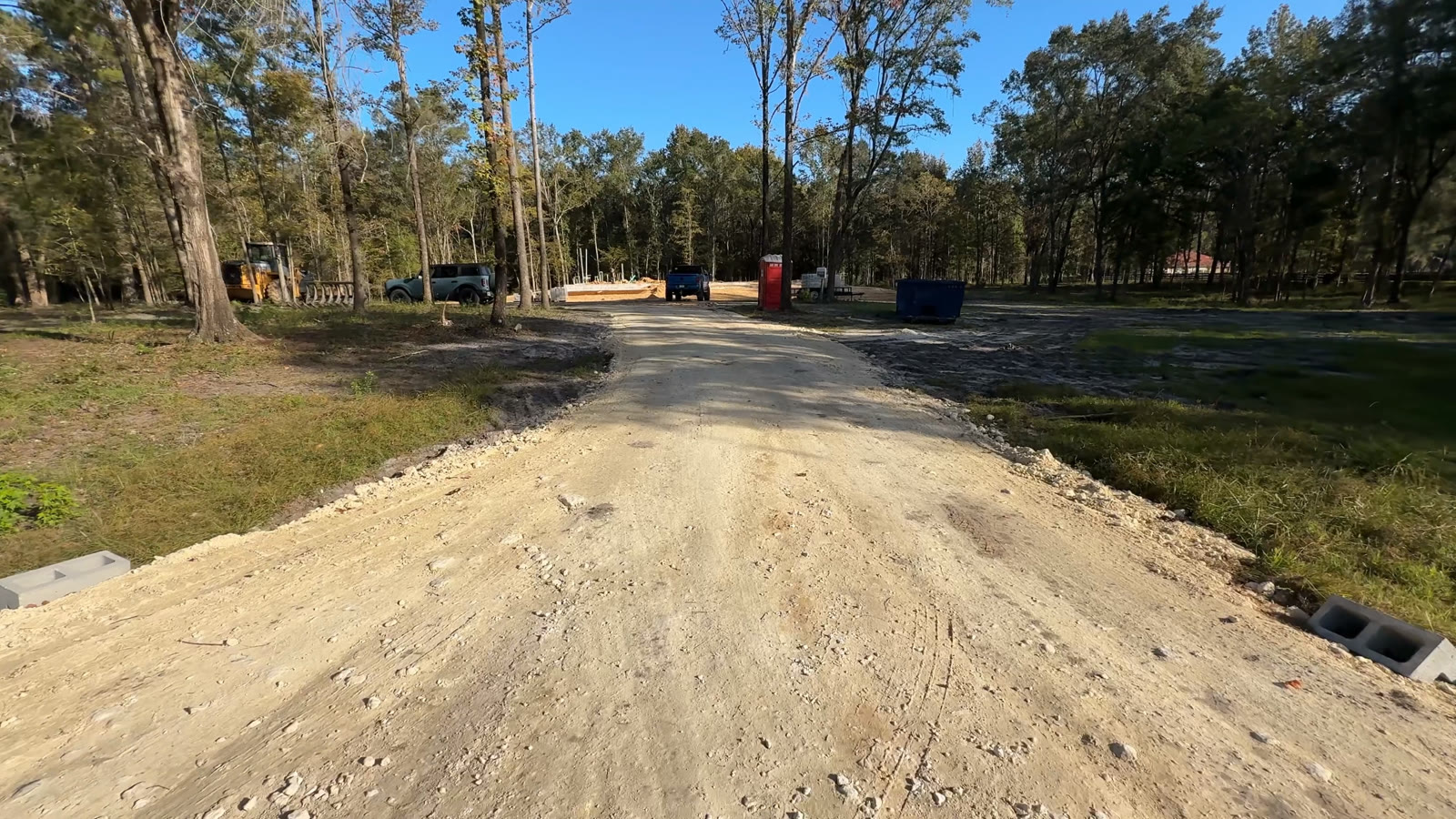
This house sits well back from the road, and that's part of what makes it feel private. It also means a long, curving driveway. This one is about 4,600 square feet, more than twice the size of a typical driveway.
It also means running power a long way: roughly 200 feet of underground conduit to bring power to the house.
(Video: 7:23)
8. Get the HOA and ARB rules before you buy
This neighborhood has an architectural review board (ARB) and an HOA, and the driveway is a real example of why that matters. On a lot with no review board, this driveway could have been dirt, which costs very little. This review board doesn't allow dirt or millings (ground-up recycled asphalt). The choices were asphalt, concrete or pavers, and the owners went with asphalt.
On a driveway this long, that one rule added real cost to the site work. Review boards protect the neighborhood, and that's a good thing. Just get the rules before you buy and before you price the house, not after. (Video: 7:57)
What it all adds up to
Add it up: clay and limestone, a flood-prone low spot, about 95 truckloads of fill, clearing, a well, a septic system, a long asphalt driveway and a long power run. All in, the site work, the utilities and the dirt work it took just to get this lot ready to start the house is running close to $100,000. (Video: 8:34)
And honestly, none of that made this a bad lot. The owners knew there was work to be done. There were maybe a surprise or two, but we figured it out. That's the point: there's no perfect lot, but there is a lot you can understand before you buy it.
Your due diligence steps, in order
- Before you make an offer: look up both flood maps (FEMA and county), the survey or topo if one exists, and the HOA or ARB rules. Vacant land often has no street address, so ask for the parcel ID and the county.
- Walk the lot: find the high and low points, picture where the water goes, and look for gopher tortoise burrows. Go back after a big rain if you can.
- During your due diligence period (for example, 30 days under contract): get a soil test where you plan to put the house, and a topo survey if you don't have one.
- Before you price the house: plan for the well, the septic system (likely an ATU in Marion County), propane if you want gas, the driveway length, and how far power has to run.
- Talk to your builder early. A good builder can walk through what that particular piece of land is going to need.
Frequently asked questions
What should I check before buying land to build a house in Florida?
Check both the FEMA flood map and the county's flood-prone areas, the survey and topography, where water drains, a soil test where the house will sit, tree-clearing rules and protected species like gopher tortoises, utilities (city water and sewer or a well and septic), the distance for the driveway and power, and any HOA or architectural review board rules.
If FEMA says my lot is in Zone X, do I still need to check the county flood map?
Yes. Zone X is FEMA's low-risk zone, but counties keep their own flood maps. On our build series lot, FEMA put the whole lot in Zone X while the county flagged a low spot as flood prone. That low spot could not be filled, graded or built on, and it decided where the house went.
When should I get a soil test on a lot?
During your due diligence period, after you're under contract and before closing. Have the borings done where you plan to put the house. On our lot, five borings found sand, clay and limestone as shallow as one foot, none of which you can see by walking the property.
Why is clay soil a problem for a house foundation?
Clay holds water. It swells when it's wet and shrinks when it dries, which can move a foundation. Clay under one part of a house and limestone or sand under another can also cause uneven settling. A common fix is a layer of clean soil between the foundation and the clay; on our lot the engineer called for two feet.
Why not just dig out the clay and replace it with sand?
Digging into clay often creates a bathtub effect: the clay walls hold rainwater in the hole with nowhere to drain, right under the foundation. In most cases it's better to build the pad up with clean fill instead of digging down.
How much fill dirt does a house pad need?
It depends on the lot, which is why the topo survey and soil test matter. The house pad in our build series took about 95 truckloads of clean fill, placed in layers no deeper than 12 inches, with each layer compacted and tested before the next.
How much does it cost to get a lot ready to build a house?
It depends on the land. On the lot in our build series, a wooded three-acre lot near Ocala, Florida, the site work, utilities and dirt work before the house could start ran close to $100,000. That covered clearing, about 95 truckloads of fill, a well, a septic system, a long asphalt driveway required by the review board, and about 200 feet of underground conduit for power. A flat, cleared lot with city water and sewer can cost far less, which is why it pays to understand the land before you buy.
Do I need an ATU septic system in Marion County, Florida?
As of now, most new homes in Marion County and the surrounding counties are likely to need an ATU (aerobic treatment unit). ATUs cost more than standard septic systems, need regular inspections and need electricity. There are exceptions, so confirm with the county for your specific lot.
How deep will my well need to be?
Nobody knows exactly until the drilling starts. Builders budget an expected depth (ours was budgeted for about 150 feet), then the well is drilled until it hits water and is tested once it's flowing.
Can I clear the trees on my lot myself?
Talk to your builder first. Cutting trees leaves stumps and roots in the ground that can rot and cause settling under a foundation. Pushing trees over with an excavator pulls the root ball out. Some cities, counties and HOAs require approval before removing trees, burning debris needs a burn permit, and gopher tortoises and their burrows are protected in Florida.
Up next: the foundation
In Episode 2 we pour the foundation: footers, stem walls and the slab. Subscribe on YouTube to follow this house from raw land to move-in.
Planning to build in Marion County or nearby?
We've been building custom homes around Ocala since 1972. Tell us about your land and your plans.
Get StartedOr call 352-401-9707